Want to learn more about surgical guide planning?
Discover how digital workflows can improve your implant success rates.
Table of Contents
The fully guided vs. pilot-only debate comes up in almost every conversation with dentists placing their first guided surgery order. The short answer: fully guided is more precise, pilot-only is more flexible — and at SurgicalGuide.Pro, both cost the same $80 per case, so the choice is purely clinical.
An implant placement technique that uses a physical surgical guide to direct drills and implants to positions planned in 3D software. It improves accuracy and reduces surgical risks compared to freehand placement.
What's the Actual Difference?
A fully guided surgical guide controls the entire drilling sequence through fixed metal sleeves. Every drill — from the pilot to the final osteotomy — passes through a sleeve that constrains its position, angle, and depth. You're following a predetermined path with no deviation.
The surgical preparation of bone to receive a dental implant. Sequential drills of increasing diameter create a precisely sized channel for implant insertion.
A 3D-printed template that fits over the patient's teeth or tissue and directs drill placement during implant surgery. It transfers the digital treatment plan into precise physical drill positions.
A pilot-only guide has a single sleeve position that guides only the initial pilot drill (typically 2.0mm). After the pilot hole is established, you remove the guide and complete the osteotomy sequence freehand, using the pilot hole as your reference.
| Feature | Fully Guided | Pilot-Only |
|---|---|---|
| Drills guided | All (pilot through final) | Pilot drill only |
| Angular control | Full sequence | Initial direction only |
| Depth control | Yes (drill stops) | No |
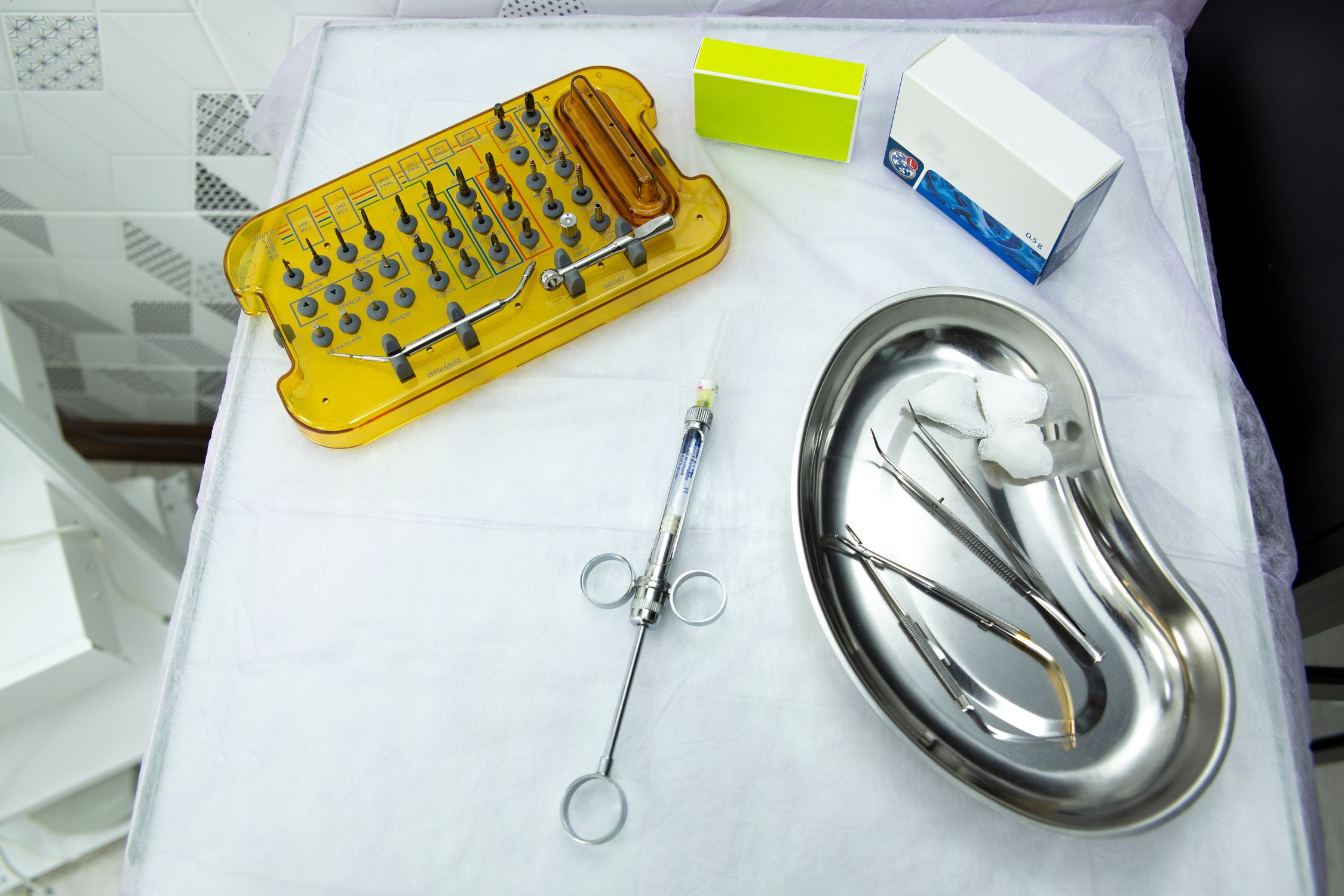
| Requires specific kit | Yes (guided surgery kit) | No (standard drills) |
| Sleeve cost | Higher (system-specific) | Lower (universal) |
| Flexibility intraop | Minimal | Maximum |
| Learning curve | Lower | Higher (freehand skills needed) |
When Should You Choose Fully Guided?
Fully guided is the right choice when precision is non-negotiable and you want maximum predictability:
- Aesthetic zone (teeth #6–11) where 1° of angular deviation affects crown emergence
- Immediate loading protocols where implant position determines prosthetic clearance
- Multiple adjacent implants where parallelism between fixtures matters
- Cases near anatomical hazards (IAN, mental foramen, sinus floor)
- Less experienced surgeons building confidence with guided protocols
The accuracy data supports this: fully guided systems achieve mean angular deviations of 2.0–3.5° compared to 4.0–5.5° for pilot-only guides.
Processing 3+ implant cases monthly? See how our guided workflow integrates with your practice.
When Is Pilot-Only Sufficient?
Pilot-only guides work well when you need directional guidance but want tactical flexibility:
- Posterior single implants with abundant bone width (>8mm)
- Experienced surgeons comfortable with freehand technique after pilot drilling
- Implant systems without guided kits (some brands don't offer system-specific sleeves)
- Cases requiring intraoperative adjustments (soft bone, unexpected anatomy)
- Budget-conscious situations where you want to avoid guided surgery kit costs ($300-800 per set)
The key advantage: you don't need to purchase a brand-specific guided surgery kit. Standard drills work fine after the pilot hole is placed.
Does the Price Differ Between Guided and Pilot-Only?
At SurgicalGuide.Pro, both types cost the same:
| Guide Type | Price | Turnaround |
|---|---|---|
| Fully guided (single implant) | $80 | 2-3 days |
| Pilot-only (single implant) | $80 | 2-3 days |
| Fully guided (3-5 implants) | $120 | 2-3 days |
| Pilot-only (3-5 implants) | $120 | 2-3 days |
The design effort is nearly identical — the planning, CBCT analysis, and guide body engineering are the same. The only difference is sleeve specification and drilling protocol documentation.
A 3D imaging technique that captures the jaw, teeth, and bone structure in a single rotational scan. It produces DICOM files used for implant planning, nerve mapping, and surgical guide design.
Some labs charge less for pilot-only because the manufacturing is simpler, but the design work is the same. We price based on design complexity, not sleeve count.
---
Not sure which type fits your case? Upload your scans and we'll recommend the optimal approach.
Ready to streamline your surgical guide workflow?
Join 200+ dental professionals who trust SurgicalGuide.Pro for precision planning.