
Multi-Unit Surgical Guides: When You Need More Than One Guide Per Arch
Placing 2-3 implants in the same quadrant? A single guide covering all positions saves chair time, improves parallelism, and costs less than you think.
20 expert articles
Clinical success with surgical guides depends on understanding both the technology and the biology. Guide selection, seating verification, drilling protocols, and error management all contribute to the final outcome. Our clinical tips distill real-world experience into actionable protocols that improve accuracy and reduce complications across all complexity levels.
Why trust these articles? Each clinical tip is derived from documented case outcomes and represents patterns observed across thousands of guided surgeries — from single-tooth restorations to complex zygomatic and full-arch rehabilitations.
Placing 2-3 implants in the same quadrant? A single guide covering all positions saves chair time, improves parallelism, and costs less than you think.

The short answer is yes—but not strictly for the reason you think. Here is an honest clinician's take on the true value of guided implantology.

Every experienced implantologist has cases from their first year they would rather forget. Here are the 7 most common implant planning errors and how to avoid them.

The fundamental question every practitioner asks: is surgical guide placement really better than freehand? Let us look at the actual clinical evidence.

How to properly sterilize 3D-printed surgical guides, which resins are FDA-cleared, and what compliance means for your practice. Complete sterilization protocol inside.
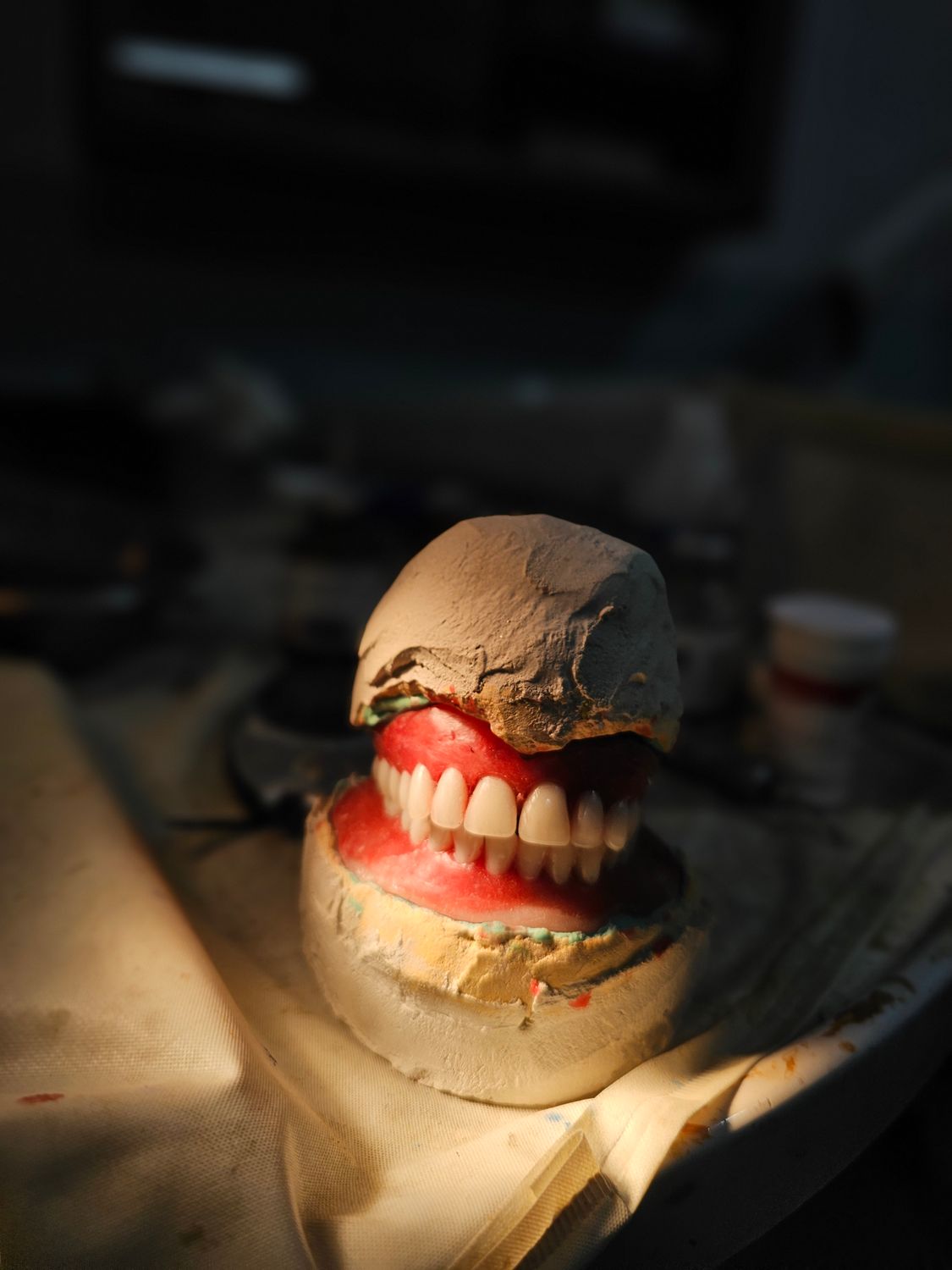
When a surgical guide won't seat, the problem is almost always in the scan, not the design. Here are the 5 most common causes and how to fix each one — plus free re-design.

A surgical guide is only useful if it seats correctly. Here's how to verify guide accuracy — from passive fit to CBCT overlay — before you place a single drill.

A bone reduction guide ensures uniform alveoloplasty before implant placement. When to order one, how it works with your implant guide, and pricing ($200 bundled with All-on-X).
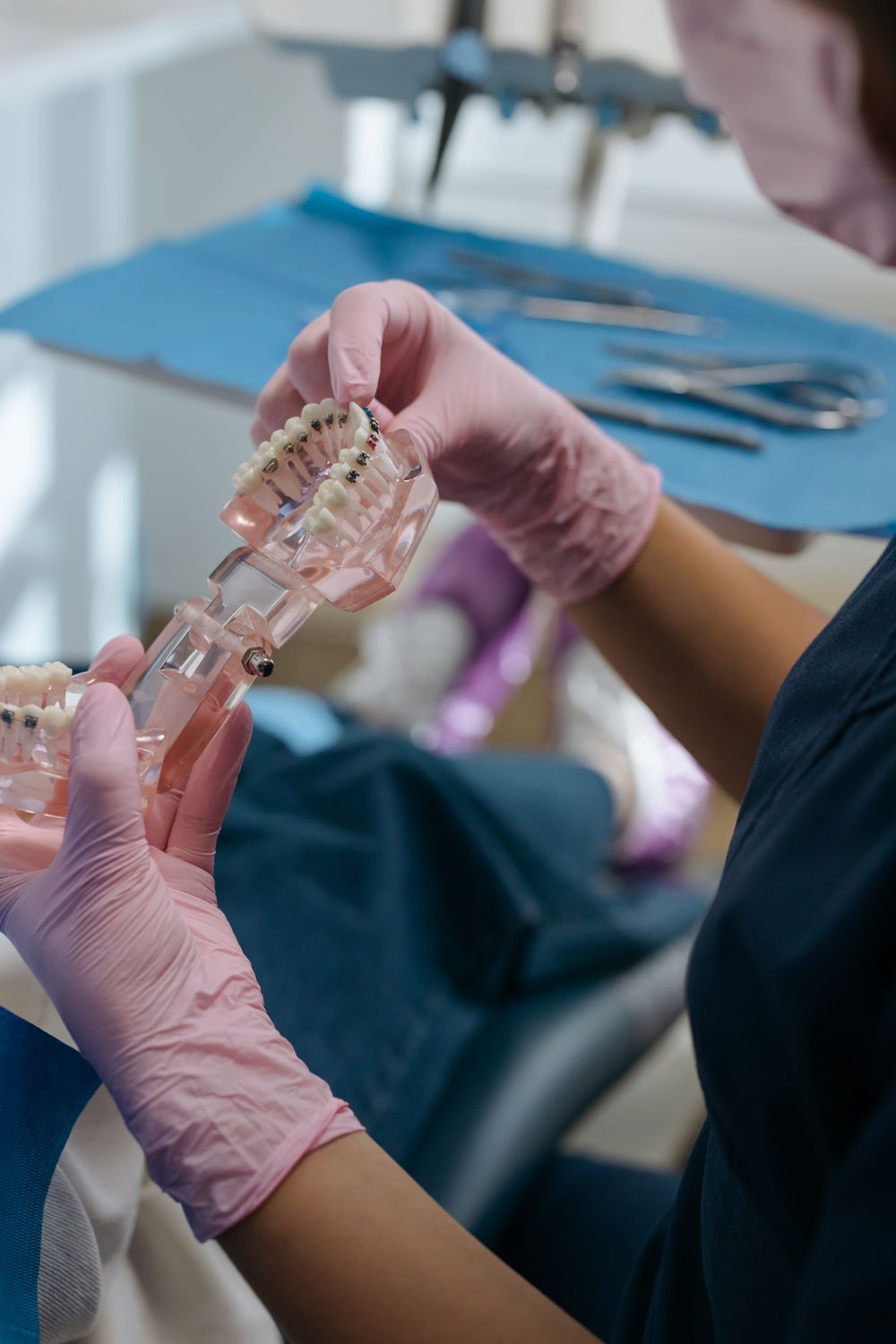
How to order a surgical guide for edentulous patients — dual-scan protocol, tissue vs bone support, and All-on-X planning. Full-arch guides from $150.

Fully guided or pilot-only? The choice depends on your case, your experience, and your implant system. Here's a direct comparison to help you decide — same $80 price either way.

Not all surgical guide labs are equal. Here are the 7 questions every dentist should ask before outsourcing guide design — from turnaround to revision policy to scanner compatibility.
Is a surgical guide worth ordering for just one implant? We break down accuracy gains, complication costs, and the real math behind the $80 decision every dentist should consider.
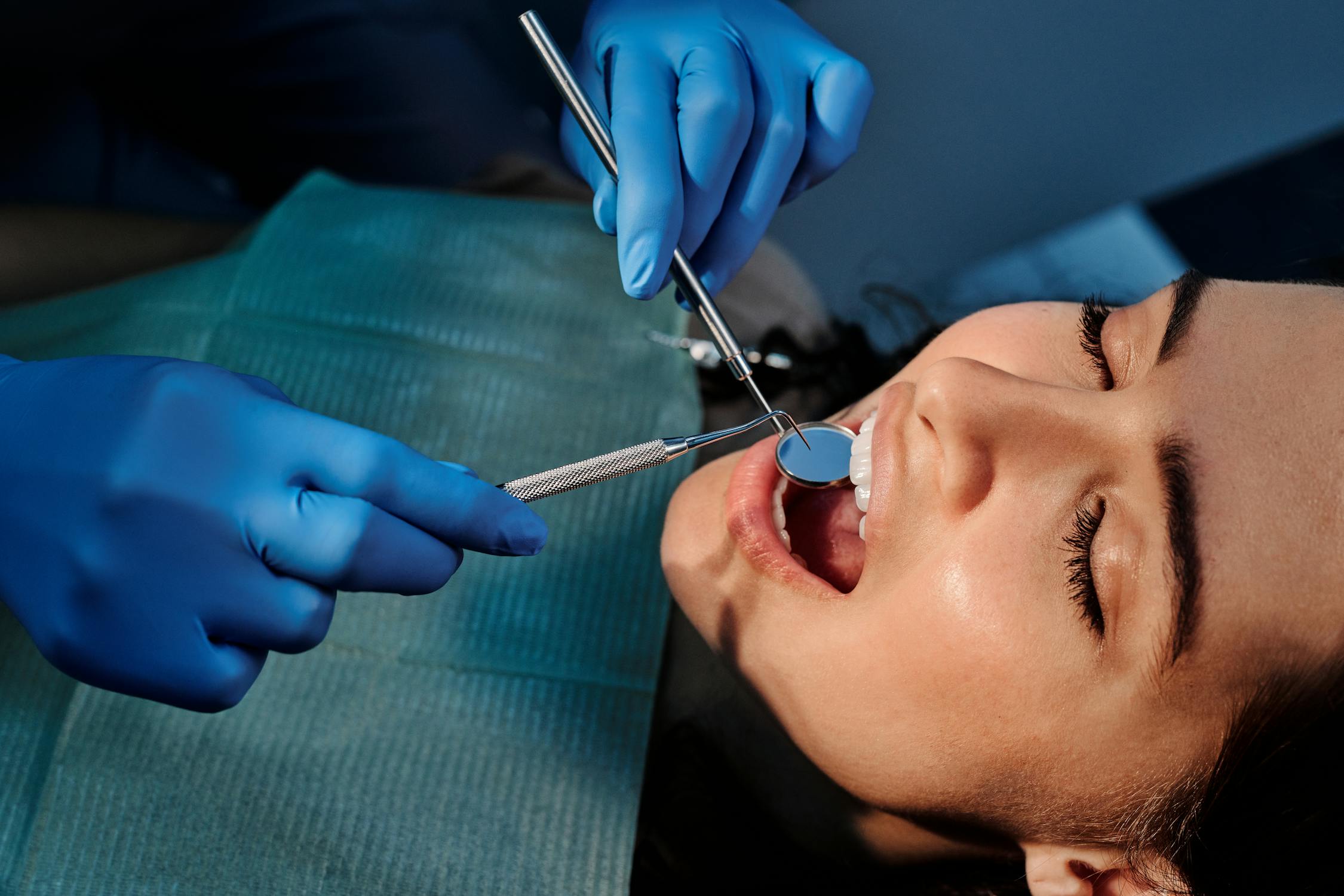
Even the best surgical guide is only as good as the CBCT scan behind it. Here are 5 avoidable CBCT mistakes that lead to ill-fitting guides, misplaced implants, and costly revisions.
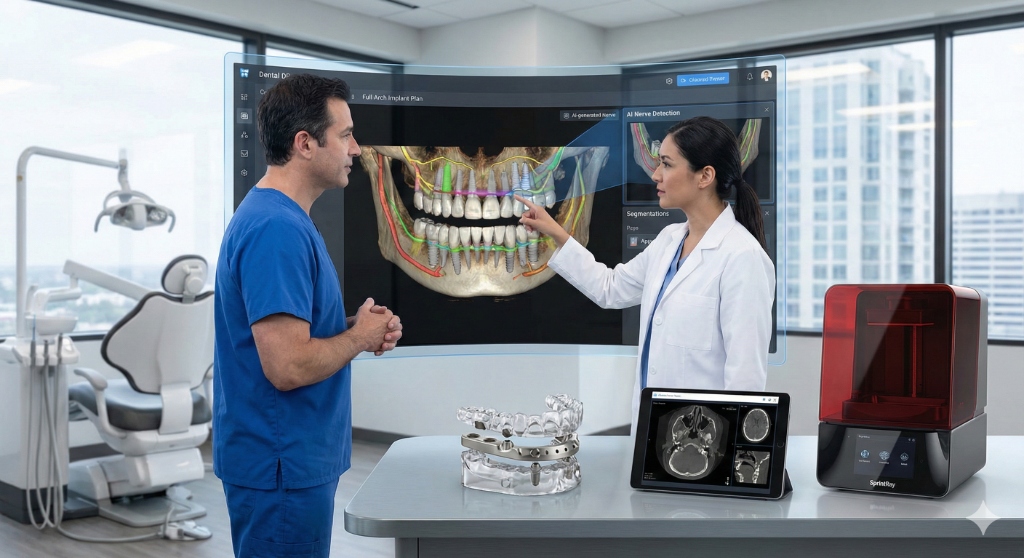
Comparing sleeved and sleeveless surgical guides: accuracy, cost, workflow, and clinical limitations. Learn which system fits your practice.
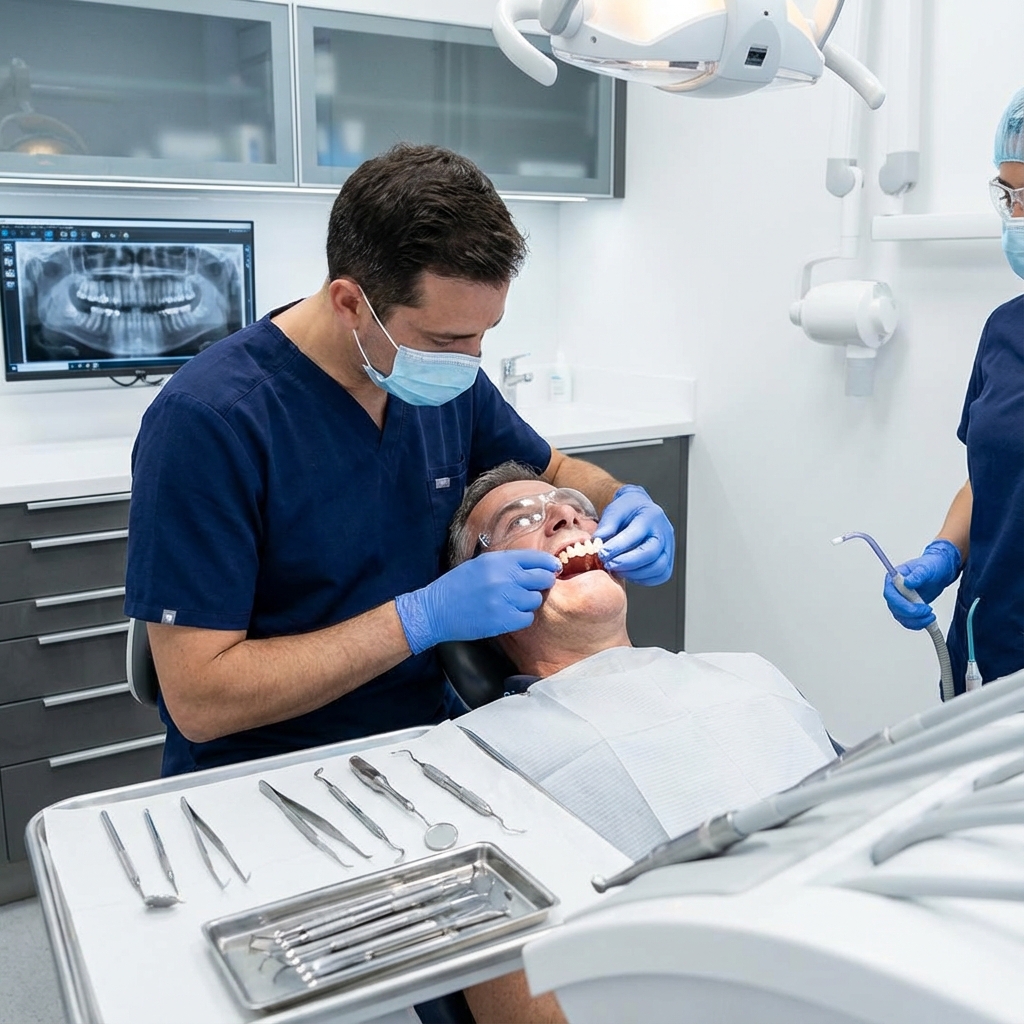
Immediate loading demands zero-error implant positioning. Learn the surgical guide design considerations that make same-day prosthetics possible.
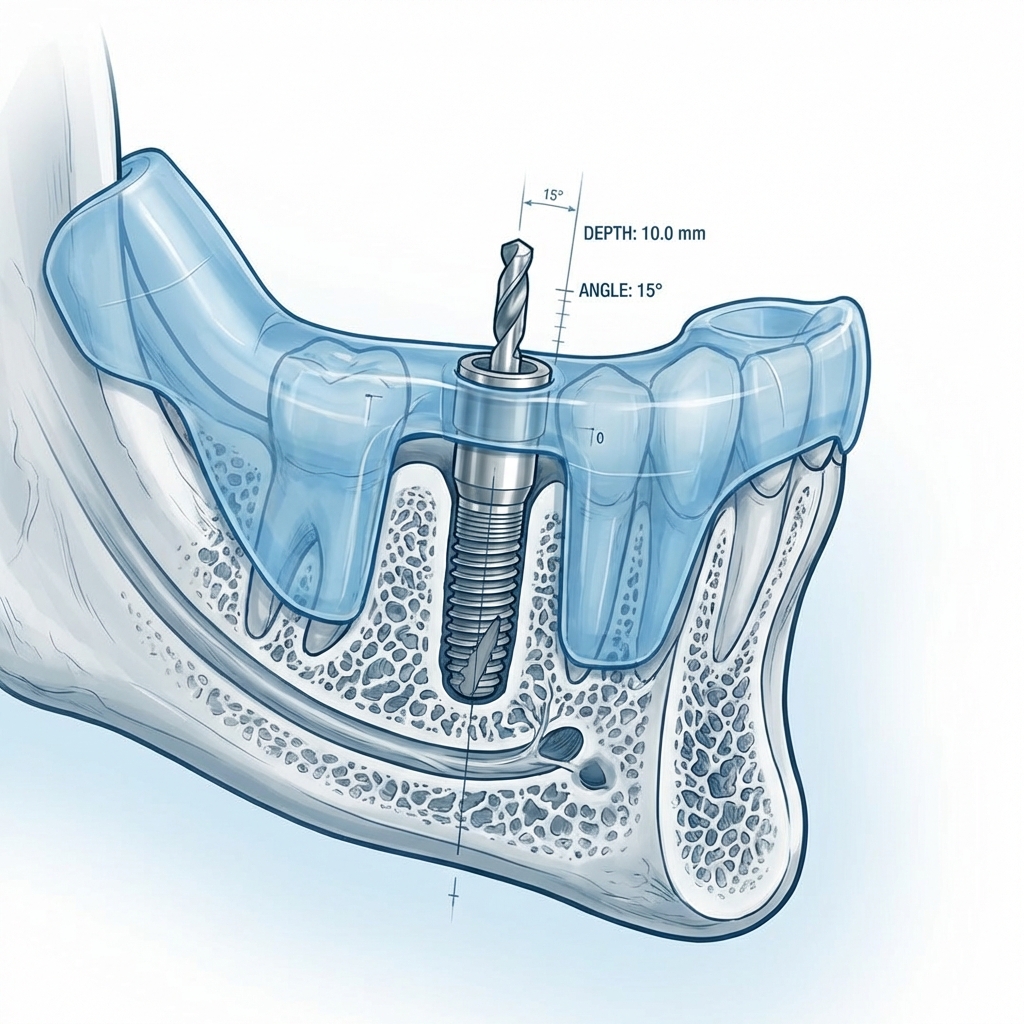
Guided implant surgery uses 3D-planned surgical guides to control depth, angulation, and position with sub-millimeter precision. Learn how it works and why it matters.
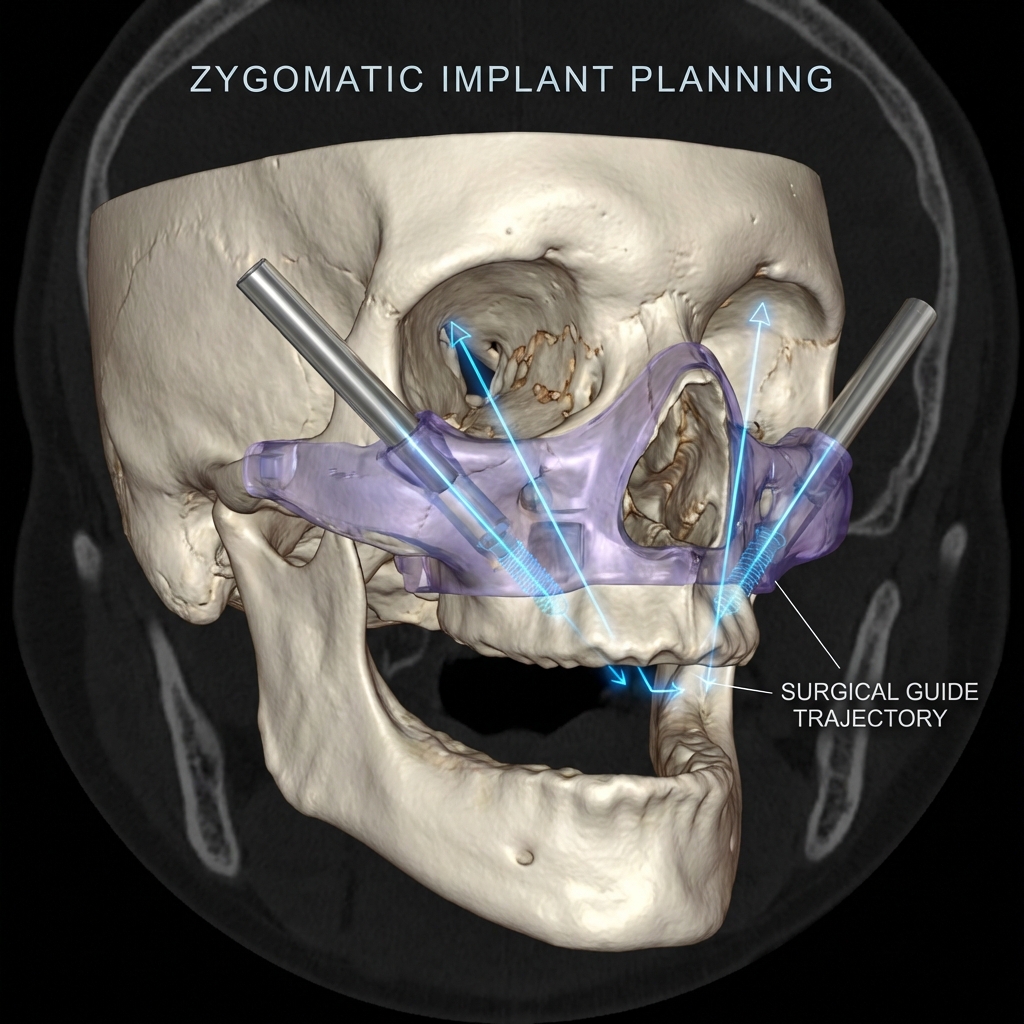
Step-by-step case study of zygomatic implant planning for a patient with severe maxillary atrophy. Digital workflow, stackable guides, and clinical outcomes.
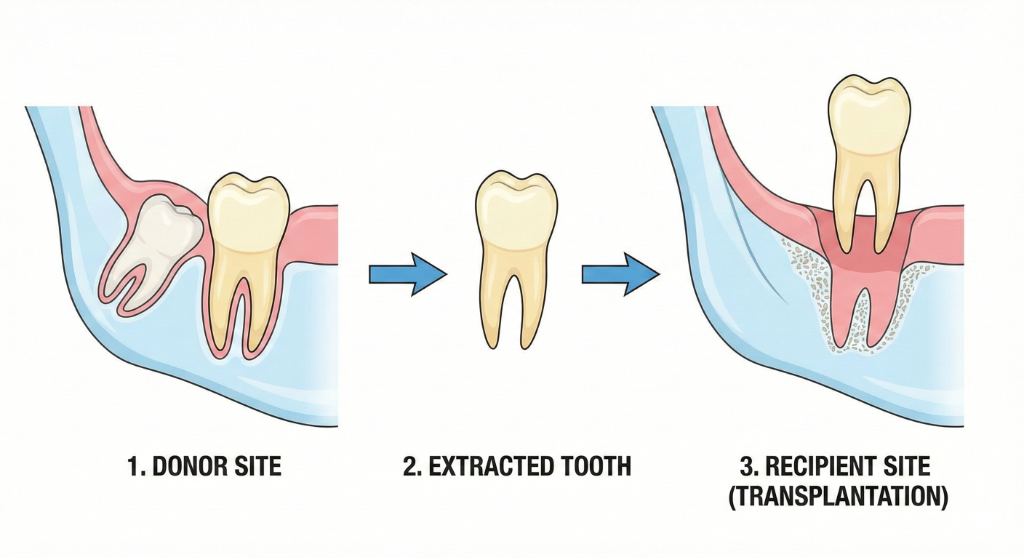
A 3D-printed autotransplant template helps surgeons prepare the recipient socket before extraction, reducing chair time and improving survival rates.
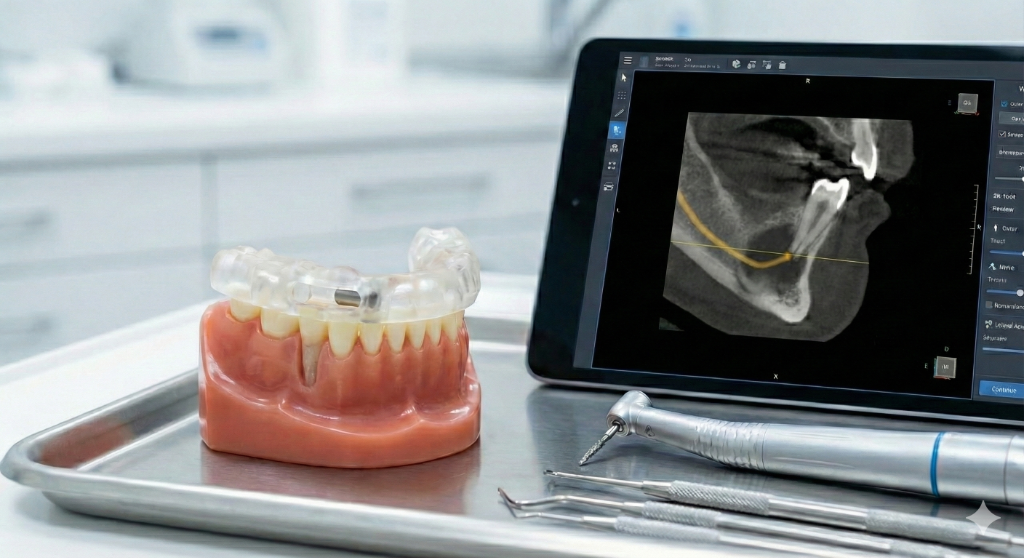
A 3D-printed apical resection guide helps endodontists locate root apices precisely, reducing surgical time and preserving surrounding anatomy.
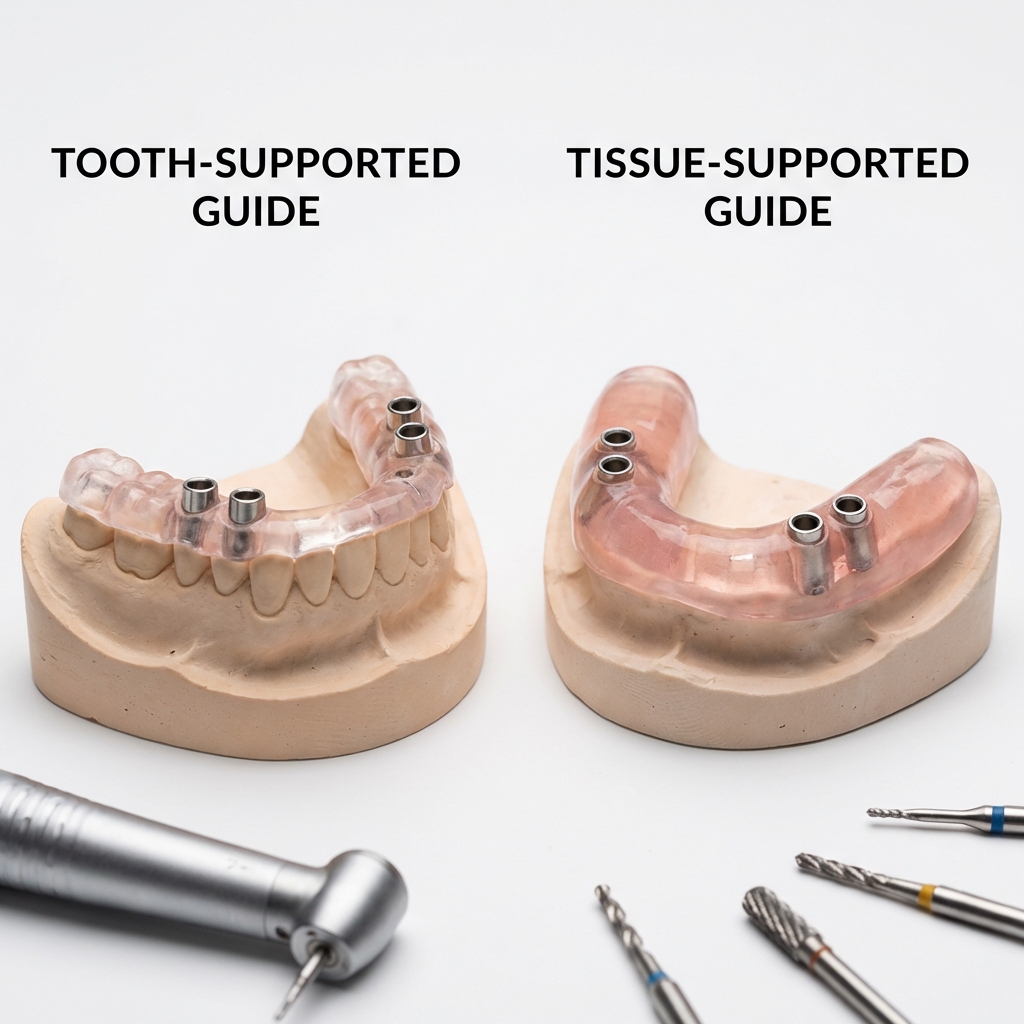
Learn the key differences between tooth-supported and tissue-supported surgical guides. Make the right choice for each clinical situation.