Want to learn more about surgical guide planning?
Discover how digital workflows can improve your implant success rates.
Table of Contents
- What Makes MegaGen Implants Different for Guide Design?
- The Knife-Thread Factor
- Xpeed Surface and Bone Response
- MegaGen Product Lines We Support
- AnyRidge
- AnyOne
- MegaGen EZ Plus
- BlueDiamond
- How We Design Guides for MegaGen (Step by Step)
- Step 1: Data Upload
- Step 2: Scan Merging and Anatomy Mapping
- Step 3: Virtual Implant Placement
- Step 4: Guide Engineering
- Step 5: Review and Approval
- Step 6: File Delivery
- MegaGen R2Gate vs. Independent Guide Design
- Real Talk: When MegaGen Guides Get Tricky
- Narrow Ridge with AnyRidge Mini
- Full-Arch Cases with Mixed Diameters
- Immediate Extraction and Placement
- Pricing
If you've placed a few dozen MegaGen implants, you already know that AnyRidge is not just another tapered implant. The aggressive Knife-Thread design grips bone differently. It behaves differently during insertion. And it absolutely requires a guide that accounts for these differences — otherwise you end up fighting the implant instead of letting it do its job.
This article covers what actually matters when ordering a surgical guide for MegaGen systems. No filler, no marketing fluff — just the practical information you need before submitting your next case.
A 3D-printed template that fits over the patient's teeth or tissue and directs drill placement during implant surgery. It transfers the digital treatment plan into precise physical drill positions.
What Makes MegaGen Implants Different for Guide Design?
Most guide design services treat all implant brands the same: pick a diameter, set a depth, export. That works fine for straightforward parallel-walled implants. MegaGen is a different story.
The Knife-Thread Factor
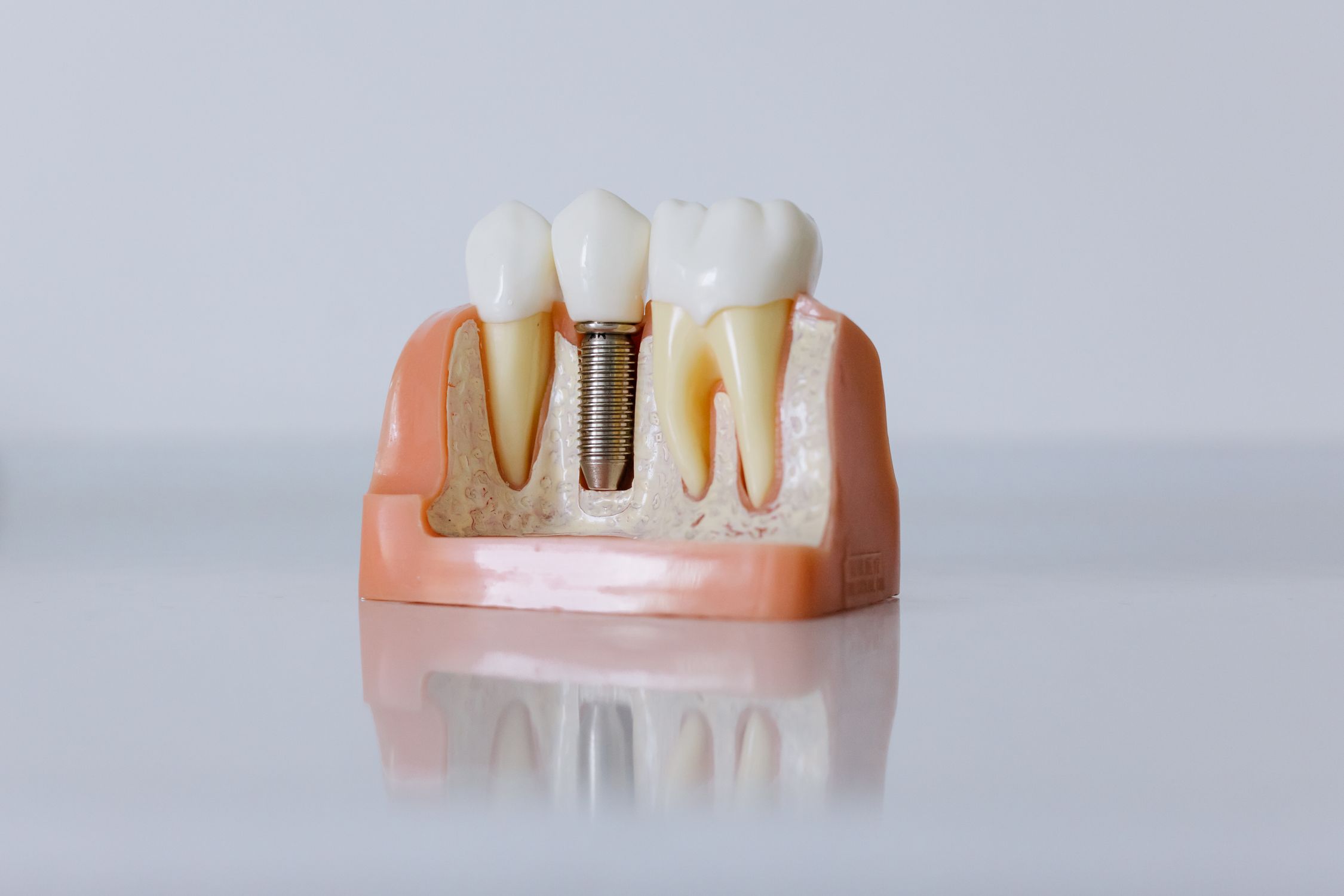
AnyRidge features MegaGen's signature Knife-Thread design — thin, wide-reaching threads that compress cancellous bone rather than cutting it. This is clinically excellent: you get strong primary stability even in soft D3-D4 bone.
But for guide design, it means the implant's effective diameter at the thread crests is significantly larger than the core diameter. If your guide designer only looks at the core body size, the sleeve offset will be wrong, and you'll feel resistance where there shouldn't be any.
We use MegaGen's actual thread-crest specifications when calculating sleeve tolerances. The guide fits correctly from the first drill to the final implant seat.
Xpeed Surface and Bone Response
MegaGen's Xpeed (calcium-coated) surface promotes faster osseointegration compared to standard SLA surfaces. Clinically, this means many surgeons are comfortable loading AnyRidge earlier — sometimes at 4 weeks instead of the traditional 8-12 weeks.
For the guide designer, this influences the planning conversation. If you're planning for early or immediate loading, we factor that into the implant positioning strategy: ensuring adequate primary stability (≥35 Ncm) and optimal prosthetic emergence for the provisional restoration.
MegaGen Product Lines We Support
We maintain complete digital libraries for all current MegaGen implant families:
AnyRidge
- The flagship line with Knife-Thread technology
- Available in Mini (3.5mm), Regular (4.0mm, 4.5mm, 5.0mm), and Wide (5.5mm, 6.0mm, 7.0mm) platforms
- Lengths from 7mm to 15mm
- Internal hex connection with color-coded mounting
AnyOne
- Simplified version with a single prosthetic platform
- Designed for straightforward cases where component inventory matters
- Same internal connection across all diameters
- Popular in clinics that want to minimize the number of prosthetic kits
MegaGen EZ Plus
- Value-oriented line for high-volume practices
- Reliable parallel-walled design
- Standard surgical protocol with universal drill sequences
BlueDiamond
- Latest generation with enhanced thread design
- Improved cutting efficiency and primary stability
- Gaining traction in European and Asian markets
How We Design Guides for MegaGen (Step by Step)
Step 1: Data Upload
Upload your patient files through the SurgicalGuide.pro dashboard:
- CBCT scan in DICOM format (0.2mm voxel or smaller for best accuracy)
- Intraoral scan in STL or PLY format (any scanner — Medit, 3Shape, iTero, Primescan)
- Specify your MegaGen model — tell us which product line and diameter range you prefer
Step 2: Scan Merging and Anatomy Mapping
We import both datasets, align them using surface registration, and map the critical anatomy:
- Inferior alveolar nerve canal traced in 3D
- Mental foramen positions marked
- Maxillary sinus floor contoured
- Bone density assessed slice-by-slice (Hounsfield units)
This is where human expertise matters. Software can auto-detect nerve canals, but it gets confused by artifacts, low-resolution scans, and anatomical variants. We verify every landmark manually.
Step 3: Virtual Implant Placement
MegaGen implants are placed from our verified digital library:
- Position optimized for prosthetic screw access (not just bone volume)
- Minimum 2mm safety margin from the nerve canal
- Minimum 1.5mm bone on both buccal and lingual sides
- Insertion depth set to match your preferred crestal, subcrestal, or equicrestal protocol
For AnyRidge specifically, we check that the Knife-Thread crests don't extend beyond the available bone envelope at any point along the implant body. This is a step most generic services skip.
Step 4: Guide Engineering
The surgical guide is designed with correct sleeve specifications for MegaGen's guided surgery kit:
An implant placement technique that uses a physical surgical guide to direct drills and implants to positions planned in 3D software. It improves accuracy and reduces surgical risks compared to freehand placement.
- Sleeve inner diameters matched to MegaGen's graduated drill sequence
- Sleeve height appropriate for your clinical scenario (sufficient clearance for drill length + handpiece)
- Fixation pin locations for cross-arch stability (in tissue-supported designs)
- Verification windows so you can visually confirm guide seating during surgery
Step 5: Review and Approval
You receive a 3D review link (works on desktop, tablet, or phone). Check everything:
- Implant positions from every angle
- Nerve distance measurements
- Bone cross-sections at each implant site
- Prosthetic emergence direction
Request revisions until you're satisfied. There is no limit on revision rounds.
Step 6: File Delivery
After approval, you receive:
- Print-ready STL of the surgical guide (works with any SLA/DLP dental printer)
- Drilling protocol specific to MegaGen's instrument sequence
- Sleeve specification sheet — which sleeves to order or press
- Full case documentation for your records
MegaGen R2Gate vs. Independent Guide Design
MegaGen offers their own guided surgery platform called R2Gate. It's well-built software, but there are reasons many clinics choose independent design services:
Cost: R2Gate guide services are priced at a premium, especially for advanced cases. Independent services like ours typically cost 40–60% less for equivalent or better output.
Mixed-brand cases: If you're placing a MegaGen in position 36 and a Straumann in position 46, R2Gate can't handle that. We design mixed-system guides routinely.
Turnaround: R2Gate cases go through MegaGen's centralized workflow. We deliver standard designs in 2-3 days and express cases in 24 hours.
Revision flexibility: With R2Gate, revisions go back into the queue. With us, you discuss changes directly with your designer, often in real time.
That said, R2Gate is a perfectly valid choice if you work exclusively with MegaGen and prefer an all-in-one manufacturer ecosystem. We're here for surgeons who want flexibility.
Real Talk: When MegaGen Guides Get Tricky
Not every MegaGen case is straightforward. Here are the situations where guide design requires extra attention:
Narrow Ridge with AnyRidge Mini
The 3.5mm Mini AnyRidge in a narrow anterior ridge is a common scenario but a tricky one. The Knife-Thread crests still extend significantly beyond the core diameter. In a 5mm-wide ridge, there's very little margin for lateral deviation. The guide must be exceptionally precise, and we often recommend a bone-supported guide instead of a tissue-supported one to eliminate mucosal play.
Full-Arch Cases with Mixed Diameters
All-on-4 or All-on-6 with AnyRidge often uses different diameters anteriorly (regular) and posteriorly (wide). Each implant site in the guide has different sleeve specifications. Getting this wrong means the wrong drill goes through the wrong sleeve — a preventable disaster that we triple-check during design.
Immediate Extraction and Placement
MegaGen's tapered design is popular for immediate post-extraction cases. But the extraction socket geometry is unpredictable. We plan the implant position to engage apical bone beyond the socket, and the guide is designed with a slightly longer sleeve to ensure it provides directional control even without a fully sealed bone socket surrounding it.
Pricing
Our pricing is the same regardless of implant brand:
| Service | Price | Turnaround |
|---|---|---|
| Standard guide design | From €35 | 2-3 days |
| Express 24h design | From €55 | 24 hours |
| Complex case (full-arch, zygomatic) | From €75 | 3-5 days |
No hidden fees. No per-implant surcharges. The price covers the complete workflow from planning to file delivery.
Ready to streamline your surgical guide workflow?
Join 200+ dental professionals who trust SurgicalGuide.Pro for precision planning.